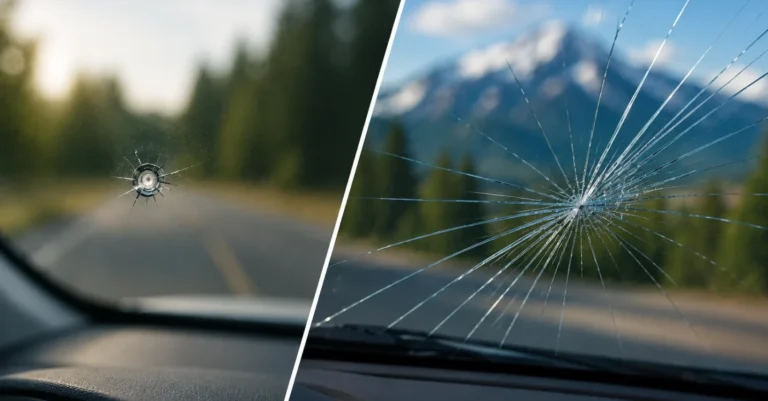
You’re driving down the highway and hear that dreaded ping. A small rock kicks up, hits your windshield, and now you’ve got a chip staring back at you every time you get in the car.
The good news? Not every chip means a full windshield replacement. Sometimes a simple repair is all you need and it can save you time and money. Other times, replacement really is the safer choice.
Here’s a simple way to figure out which one applies to you.
When a Repair Is Usually Enough
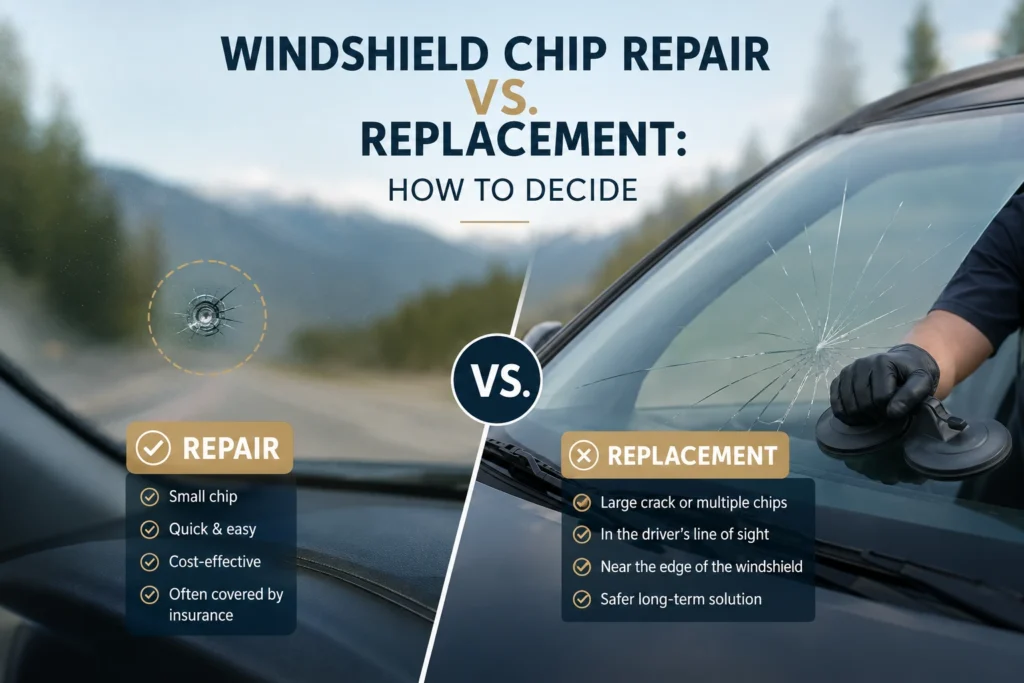
Small chips and cracks can often be repaired instead of replaced, especially if you catch them early. As a general rule, repair is a good option when:
- The chip is smaller than a quarter (about the size of a loonie)
- The crack is shorter than a dollar bill
- The damage isn’t directly in your line of sight
- The chip isn’t near the edge of the windshield
- There’s only one chip, not several spread across the glass
If your damage fits this description, a repair usually takes less than an hour. A technician cleans out the chip, fills it with a clear resin, and cures it so it stops spreading. Your windshield stays intact, and in many cases the repair is fully covered by insurance with no deductible.
When Replacement Is the Safer Option
Some damage just can’t be repaired safely. You’ll likely need a full replacement if:
- The crack is longer than a dollar bill
- The chip or crack sits directly in front of the driver’s eyes
- The damage is near the edge of the windshield, where the glass is more likely to crack further
- There are multiple chips or cracks
- The windshield has already been repaired once in that spot before
Edge cracks are worth calling out specifically. Damage near the edge of the windshield puts stress on the weakest part of the glass, and it tends to spread fast, sometimes within days, especially in cold weather. In those cases, repair just isn’t a reliable long-term fix.
Why the Location of the Damage Matters So Much
Here’s something a lot of drivers don’t realize: it’s not just the size of the chip that matters, it’s where it is.
A chip the size of a pea sitting right in your direct line of sight can be more of a problem than a slightly bigger one off to the side. Even a small, well-repaired chip can leave a faint distortion in the glass. That’s not a big deal near the edge of your windshield, but if it’s right where you’re looking down the road, it can be distracting.
That’s why a technician will always look at where the damage is, not just how big it is, before recommending repair or replacement.
What About ADAS and Sensor Cameras?
If your car has features like lane departure warning, automatic braking, or adaptive cruise control, there’s an extra step to think about. Many of these systems use a camera mounted right behind the windshield.
If your windshield needs to be replaced, that camera usually needs to be recalibrated afterward so those safety features keep working properly. This isn’t something to worry about, it’s just part of a proper replacement job, and any shop working on a newer vehicle should already have this covered as part of the service.
If you’re only getting a small chip repaired, recalibration usually isn’t needed, since the original glass and camera position stay the same.
A Simple Way to Think About It
If you’re still not sure which one you need, here’s an easy way to picture it:
Repair is like patching a small hole in a wall, quick, affordable, and it stops the problem from getting worse.
Replacement is like putting in a whole new wall, necessary when the damage is too far along, in the wrong spot, or affecting the structure.
When in doubt, it’s always worth getting it looked at sooner rather than later. A chip that could’ve been repaired for free can turn into a full replacement if it’s left too long, especially once cold weather hits and the glass starts expanding and contracting.
Frequently Asked Questions
Can I keep driving with a chipped windshield?
Does insurance cover windshield repair or replacement?
How long does a chip repair take?
A typical repair takes about 30 to 45 minutes. You can usually wait for it and drive away right after.
How long does a full windshield replacement take?
Will a repaired chip still be visible?
What if the chip is under my wiper blade or near the edge?
Chips near the edge of the windshield are more likely to need replacement rather than repair, since that part of the glass is under more stress. It’s worth getting it checked rather than guessing.
Not Sure Which One You Need?
The easiest way to know for sure is to have a technician take a quick look, most of the time it only takes a few minutes to tell whether a repair will hold up or if replacement is the better call.
If you’re in North Vancouver or Port Coquitlam, our team at BC Auto Glass can check your windshield, walk you through your options in plain language, and handle the paperwork if you’re going through ICBC. No pressure, no guessing, just the option that actually makes sense for your car.
Book a free assessment or give us a call, and we’ll help you figure out the right fix.